Live service games (LSGs) are designed to receive ongoing updates, including bug fixes, gameplay improvements, seasonal content, battle passes, and limited-time events. Usually they’re free-to-play games that are supported by cosmetic purchases, paid expansions, and in-game currencies. They’re designed to keep players engaged over a longer period of time rather than delivering a one-and-done experience. To achieve this, many of these games go to extensive lengths to make that happen. In this article I intend to go over every tactic they use, how they do it, why, and what are some good and bad examples of live service games.
Why do they do it?
How do they earn money?
Live Service Games are more often than not designed so that making any significant progress in the game takes an enormous amount of time. Don’t worry about that, though, because they’re also offering microtransactions that allow players to speed up progress.
This wouldn’t be such a bad thing if they didn’t employ tactics that are manipulating you to spend money. The most common would be the practically unattainable in-game currency where they barely give you any and the only way to get it is to buy with real money. With that currency you can buy perks like faster leveling, stronger pets or better equipment. Why would you spend 3 months farming “Legendary Staff of Gandalf” when you can get it now for $50 and destroy those F2P peasants.
Or in some cases it can be something as simple as a $20 monthly battle pass or a $30 dollar expansion. They usually unlock new shiny time limited skins, extra premium rewards and/or brand new content.
These tactics are always combined with such meticulously crafted UI that every time you look at the screen, there’ll be a “promotional” pack reminding you of how much progress you would make if you just bought it.
What Are Some Of Tactics?
There are multiple tactics that one gaming companies can use in order to keep their player-base coming back to game and eventually spend their money, here are most common examples:
Fear of missing out (FOMO)
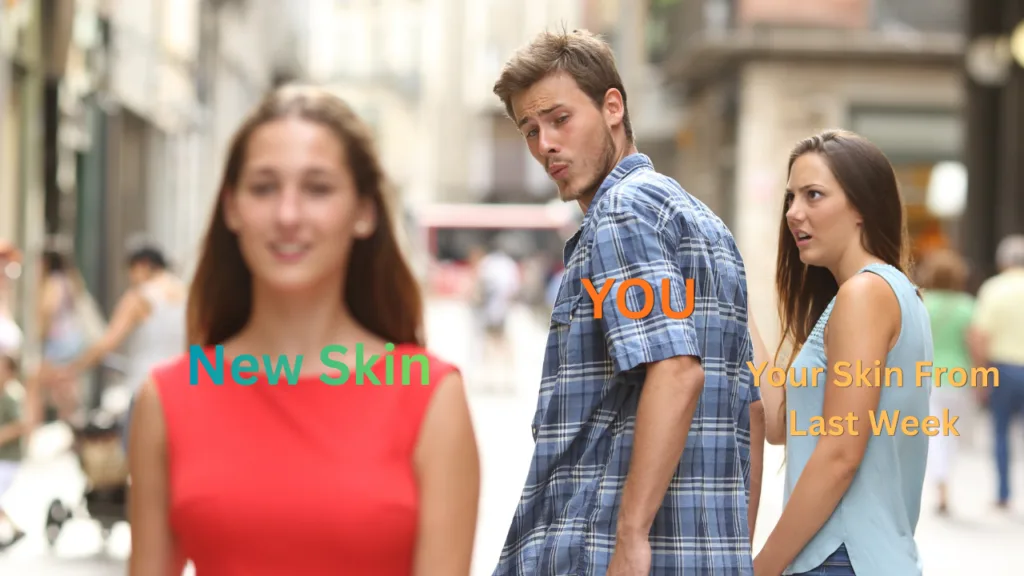
The most common method that they use is creating a feeling that you are losing out on something by not coming back to play the game regularly. So instead of playing games because you’re excited, you start playing games because you’re afraid of what you’ll miss. Over time it’s no longer an enjoyable hobby but a chore that you have to do daily.
Against popular beliefs, FOMO isn’t a problem created by the internet and modern society, it always existed, we just coined the term. It’s human nature, we have always been afraid of missing valuable opportunities. During “The California Gold Rush” thousands of people abandoned their homes chasing a chance at fortune. Not because everyone was guaranteed success but because they were afraid someone else would find it first.
The more modern example of it would be Pokémon Card Craze. Suddenly, everyone “loves” Pokemons, they’ve collected cards their whole life. It’s amazing how quickly many of them became experts. People who hadn’t touched a card in years were hunting for rare pulls, watching prices rise, and talking about their favorite Pokémon. It just goes to show that FOMO can make people want something more intensely than they originally did. No shade to real OG Pokemon fans who were in this for the love of it.
Live service games use the same psychology but instead of cards it’s exclusive skins, a seasonal character, or event items that disappear forever if you don’t get it this week.
You can even say that everything on this list goes back to FOMO one way or another and you’ll be right.
Daily Login Rewards
The most obvious and regular form of FOMO is the daily login award. Every day that you login, you’ll get a basic reward, usually in-game currency that has a little to no effect on your progress but every 10th, 20th, or 30th time that you login, you will get something shiny or a fraction of some sort of premium currency that if you login for a year, you might have enough to buy something like exclusive skin, battle pass or sometimes important piece of gear needed for faster progress.
It forces you to check-in daily and since you’re there, you might as well do other things and pick the rewards from other places. It happened to me more times than I would like to admit. You would know about this if you ever played gacha games or MMORPGs.
The simple reason why this works is: humans don’t like losing progress. A reward that takes a minute to pick-up can feel way more important when missing it means falling behind or breaking the streak. The game doesn’t need to convince you that playing it today will be fun and enjoyable. It only needs to convince you that not playing has a consequence and sadly it works on most of us.
Example:
You have logged in for 27 days. Logging in on day 28 takes 30 seconds. Even if you don’t really want to play, your brain says: “Don’t ruin the streak.”
Battle Passes
Live Service Games are almost guaranteed to have a Battle Pass implemented in their system. They all work on the same system where you have a free and premium tier. The “Free Tier” is free (DUH) and offers an array of basic rewards. A “Premium Tier” requires you to spend either real money or premium currency (which you can only get by swiping your real-life card) to activate.

They usually offer more exciting rewards like premium skins, premium currency, animation and other shiny perfect stuff. In full transparency, if a free game has only a battle pass with premium skins and other goodies, I’m completely fine with it.
In reality, how often is that the case? Unfortunately way less than you think and they all operate on the same system where you have to login daily and finish quests in order to level up Battle Pass. Even that can be bypassed by purchasing battle pass experience with premium currency of course. For a 10x of the price of actual Battle Pass, you can level it fully. That’s the part that I feel is unnecessary and should be removed. But if they do that, how else will you be forced to log in daily?
Limited-time Cosmetics/Skins
The other most common approach is through “Limited-time” cosmetics and skins that are exclusive items that can only be earned or purchased during a specific event or season. Once that window closes, they may never return or players simply don’t know if they will.
That uncertainty encourages people to log in and play, even if they weren’t planning to. The skin itself doesn’t create that urgency but the deadline does. By putting a timer on a digital item (which costs them absolutely nothing to reproduce), they transform “pixels” into something that feels scarce.
If you aren’t playing during that period, you won’t ever get it. Think about it. There’s someone out there who can’t use a skin they really like because they had the audacity to take a break from video games during summer 2020. Maybe they just wanted to enjoy their last summer before college, or maybe they were starting a new job or simply they wanted to play something else.
It’s something that even years later, you still can’t get. Not because you don’t have money or skill to unlock it but because you decided to prioritize something else. How dare you? SHAME ON YOU.
You see how ludicrous it sounds? Imagine if Netflix made its shows only watchable on the first month of their release and never again. If you were busy and missed it, your bad. Better luck next time.
The strange thing is that we’d consider this business model ridiculous almost anywhere else. But in gaming, we’ve become so used to limited-time cosmetics that it barely raises an eyebrow.
Variable Rewards (unpredictable loot and progression)
Variable Rewards means that you don’t know when you’ll get a reward you want. It is a system where you have a certain boss/enemy that you have to fight and beat on a daily basis in order to see if they drop the loot you desire.
It’s important to note that this system existed for decades and can make loot exciting. Variable rewards on their own aren’t inherently manipulative but the concern arises when they’re combined with other engagement systems. The players automatically think :
“I need to log in today because the event ends tomorrow, my battle pass expires next week, the shop resets tonight, and maybe this boss will finally drop the item.”
So you see, it’s not bad on its own but the stacking of multiple psychological incentives is what makes it a successful manipulative strategy. Which they’re banking on.
Social Pressure From Friends and Guilds

This part of LSG is probably what we all experienced at some point in our lives and this is one of the least talked about but most effective engagement mechanics.
I’ll be the first to admit, as a kid all of my friends were playing CS1.5 in internet cafes, and while I had a PC and the game at home, I played it mostly in internet cafes because that’s where my friends and the LAN parties were.
Another example is when I was playing PWI (Perfect World International), there was a guild I was in, which was one of the top guilds on server and if you ever played MMOs, you know how it is. There were daily organized dungeons, guild meet-ups, PVPs and weekly guild wars. That’s just the things I can remember off the top of my head. It’s the people that you’ve spent the previous year or more hanging out, talking, playing with and you can’t just randomly abandon.
Again it’s only human nature, it’s completely normal that you don’t wanna disappoint people that you care about. Developers know about this and that’s why they encourage players to join guilds, add friends, form clans, create raid groups, and share progress. The more connected you are, the harder it is to walk away.
The social aspect of the game itself isn’t manipulative. Playing with friends is one of the best parts of gaming. The problem arises when they tie exclusive rewards or time-limited stuff to other things where any progression would be impossible without everyone logging in. That way players feel obligated to log in for the group’s sake. Even if you don’t feel like it. It became a common practice that many mobile games use.
Time-limited Events
Similar to skins, time-limited events are banking on players’ fear of missing out. The significant difference is that these events are free and often found in abundance. What that means is that games most of the time don’t have just one event going on but rather multiple.
All of them offer rewards if you complete certain objectives over a certain period of time. And again the best example would be a gacha game, the one I play regularly, Summoners War.
They have 3-5 events running constantly and in order to get all the rewards from them, you have to log every day for 2 months. It’s just one of the ways they keep their player base in check and logging every day.
As for me, I’ve stopped caring and if I miss something, no big deal. Who cares? Unfortunately not many players have that mentality and they’re very religious when it comes to not skipping a day. They’ll even go to lengths of cancelling other plans so they don’t miss out. Devs are fully aware of it and they spend a good portion of their time planning and creating events instead of creating new exciting content.
“Sunk cost” thinking after investing time or money
Last but not least is something called “sunk cost”. It’s one of the strongest reasons why players keep returning, not because it’s exciting but for all the time they’ve put in. After spending hundreds of hours leveling characters, collecting items, learning all the ways of the game, walking away can be hard.
It can feel like you’ve thrown everything away.
This is known as sunk cost thinking: the belief that because you’ve already invested so much, you need to continue. It only worsens if you put money in it. It gets even harder.
I’ve experienced it with a PWI Mobile. I’ve invested a lot of time and money in that piece of # and I’ve gotten extremely bored with it. Whenever I thought about quitting it, even though I stopped spending on it, there was that thought in the back of my head “what about all that money you invested?” That’s what happens to most.
You wanna know something? The strange part is that the time and money are already gone. Continuing doesn’t bring them back; it only adds more. Make it make sense.
Conclusion
I’ve gone on a big rant in this article but in full transparency, not all Live Service Games are like that. There are examples that do things properly and not prey on the weakness of the players. However, it seems that more games opt-in to these tactics than not.
In my humble opinion, I don’t see this as a thing of the future because with each passing day there are new measures and laws against these predatory methods. I wouldn’t be surprised if these sorts of things get banned for children under 18 and force them to take, for lack of a better word, a more humane approach to monetizing their games.
You gotta remember to be careful and if you decide to splurge, spend responsibly.
What are your thoughts on this topic? Did you ever fall for one of these tactics? Which game do you think is the worst/best when it comes to this? Let me know in the comments.